Let’s Talk Rockwool (Mineral Wool) Insulation
When it comes to insulation choices, not all batts are created equal. At Green Minds Building, we spend a lot of time evaluating materials—not just based on cost, but on performance, durability, and how they actually behave inside real homes.
One product we consistently come back to is Rockwool, also known as mineral wool insulation. While fiberglass batts still have their place, there are several reasons why Rockwool is often our preferred option, especially in certain applications.
Below are three key reasons why.
1. Excellent Sound and Fire Performance
One of Rockwool’s biggest advantages is its density.
Because mineral wool is denser than fiberglass, it performs exceptionally well at:
Reducing sound transmission between rooms and floors
Improving fire resistance, as it is non-combustible and can withstand extremely high temperatures
This makes Rockwool an excellent choice for:
Basement suites
Mechanical rooms
Between separate living spaces
Multi-unit or semi-detached homes
In short, it adds an extra layer of safety and comfort that many homeowners don’t realize they’re missing.
2. Higher R-Value Per Inch
In many cases, mineral wool batts offer a higher R-value per inch compared to standard fiberglass batts.
Why does this matter?
It allows for better thermal performance in the same wall or ceiling cavity
It helps reduce heat loss without increasing wall thickness
It contributes to more consistent indoor temperatures
While insulation performance depends on proper installation and air sealing, starting with a higher-performing material gives the whole system a stronger foundation.
3. Hydrophobic and Moisture Resistant
Unlike fiberglass, Rockwool does not absorb water.
Mineral wool is hydrophobic, meaning it sheds moisture instead of soaking it up. This makes it particularly well-suited for areas where moisture is a concern, such as:
Basements
Crawlspaces
Rim joists
Below-grade walls
In damp conditions, fiberglass can lose performance and potentially contribute to mold issues. Rockwool maintains its shape and insulating value even when exposed to moisture—an important long-term durability advantage.
A Note on Cost and Environmental Impact
Rockwool isn’t perfect, and it’s important to be transparent about the trade-offs.
It requires more energy to manufacture (mineral wool is made by melting rock at very high temperatures)
It is more expensive than most fiberglass batt options
Because of this, it’s not always the right choice for every project or every budget. At Green Minds Building, we don’t push materials blindly—we recommend them where they make sense and provide real value.
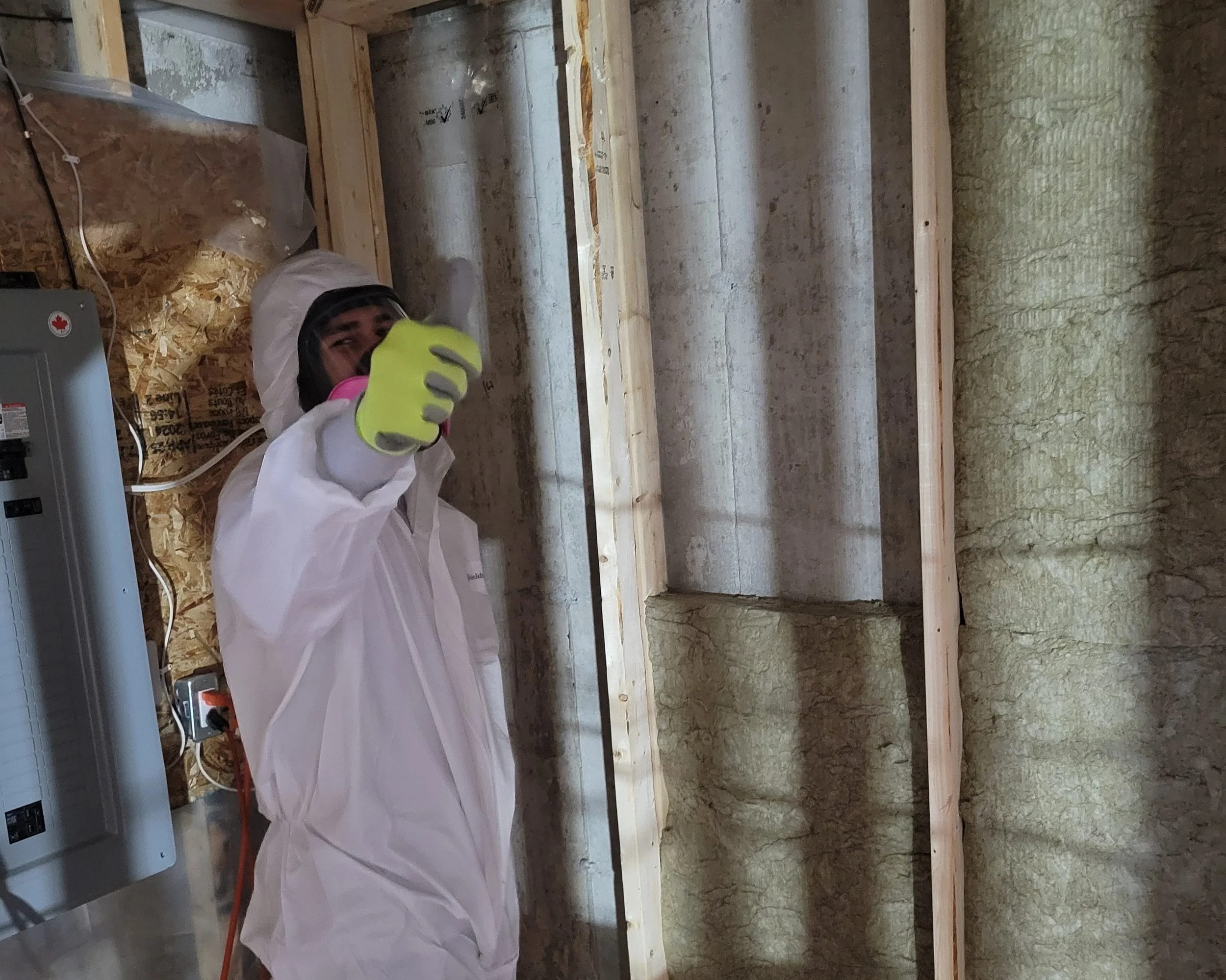
Our Take
Despite the higher cost and energy input, we believe Rockwool is one of the best batt insulation products available today. When performance, durability, sound control, and moisture resistance matter, it’s often worth the investment.
As always, the best insulation choice depends on the specific application, the building assembly, and the overall goals of the project.
What about you?
Have you used Rockwool before, or are you considering it for your home? We’re always happy to talk through options and help you make an informed decision.